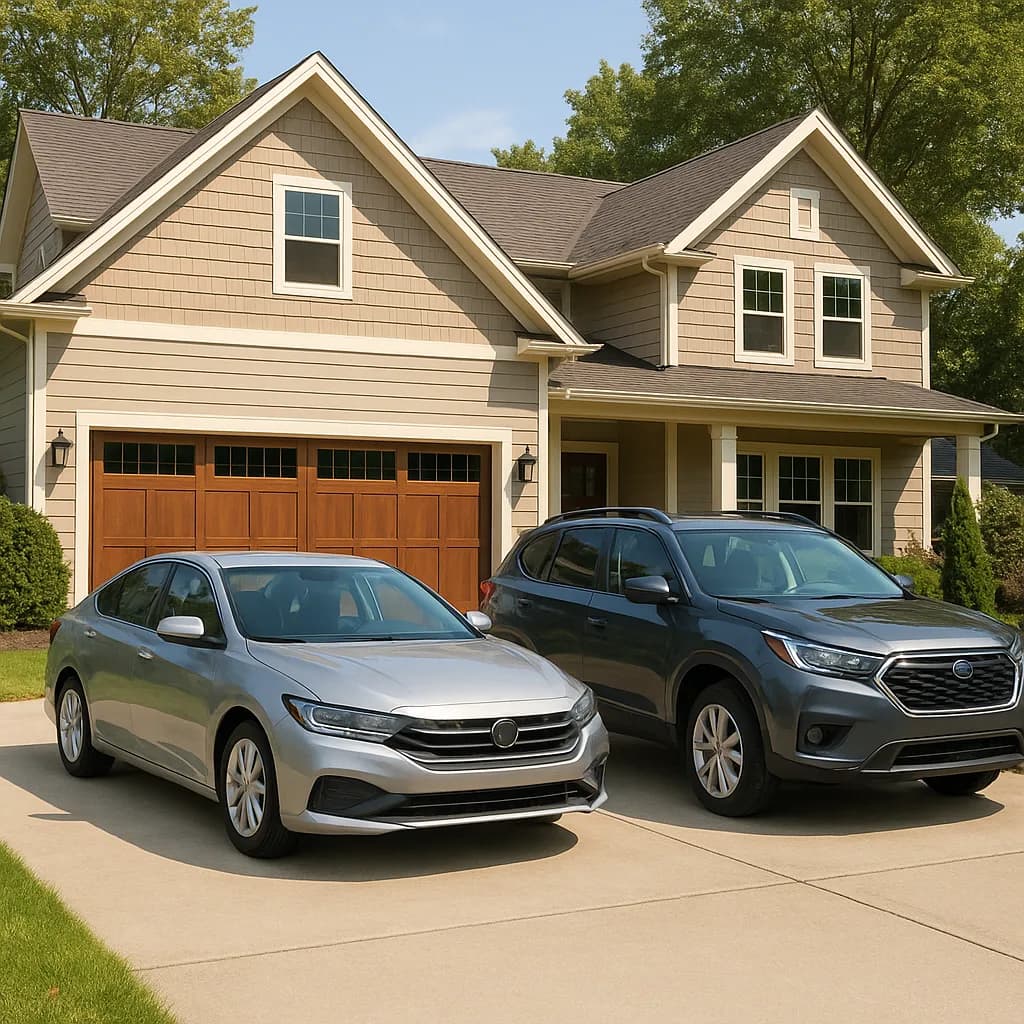
When Every Car in the Household Drives Under 5,000 Miles
You own two or three vehicles. None of them breaks 5,000 miles a year. One sits in the driveway most of the week because you work from home. Another is a weekend car. The third belongs to a household member who takes transit to work. You know the multi-car discount exists, but your premium still assumes each vehicle drives 12,000 to 15,000 miles annually—the industry default—and you are paying for exposure that does not match your actual use.
The structural reality: most carriers apply the multi-car discount to the base premium before adjusting for mileage. If your declared mileage stays at the standard assumption, the discount saves you money but leaves the largest cost factor—annual miles driven—untouched. The compounding opportunity is getting every vehicle on the policy rated at its true low mileage, then applying the multi-car discount on top of those reduced base premiums.
Compare car insurance rates in your state
Get quotes from licensed carriers — no obligation, no spam, results in minutes.
Get Your Free QuoteNational Average Auto Premium
Low-mileage households with multiple vehicles can drop well below this range when every car qualifies for mileage-based pricing and the multi-car discount applies to the reduced base.
NAIC 2023 Auto Insurance Database
How Carriers Rate Multiple Low-Mileage Vehicles
A multi-car policy bundles every vehicle under one policy number and applies a percentage discount to the combined premium. That discount typically ranges from a modest reduction to a more substantial cut, depending on the carrier and the number of vehicles. The discount is not the problem. The problem is that the premium being discounted still assumes each car drives the industry-standard annual mileage.
Carriers calculate risk per vehicle. Annual mileage is one of the largest rating factors because more miles mean more exposure to claims. When you add a second or third vehicle to the policy, the carrier asks for an estimated annual mileage for each one. If you leave those estimates at the default—or if the agent enters a standard figure without asking—you pay for 12,000 or 15,000 miles per car even when your odometer tells a different story.
Low-mileage rating works by reducing the base premium for each vehicle before the multi-car discount applies. A car driven 4,000 miles a year costs less to insure than one driven 14,000 miles, all else equal. When you stack that mileage reduction across two or three vehicles and then apply the multi-car discount to the lower combined base, the compounding effect is significant. The savings do not come from the discount alone—they come from correctly rating every vehicle at its actual use.
The blocker: carriers do not automatically verify your mileage at renewal, so declared estimates often stay locked at the original figure for years, even as your driving patterns change.
Verifying Mileage Across Multiple Vehicles

Pull the odometer reading for each vehicle and calculate annual miles driven over the past 12 months. If you bought a car mid-year, prorate the mileage to an annual figure. Carriers want an annual estimate, not a lifetime total. When you call your agent or log into your account to update the policy, provide the calculated figure for each vehicle separately. Do not round up to a standard bracket—if the car drove 4,200 miles, declare 4,200, not 5,000 or 6,000.
Some carriers offer a formal low-mileage discount that requires odometer verification at renewal. Others adjust the base rate when you declare mileage below a threshold, typically 7,500 or 10,000 miles per year, without requiring documentation unless a claim is filed. A third option is telematics: a plug-in device or smartphone app tracks actual miles driven and adjusts your premium at each renewal based on recorded data. Telematics works well for households with multiple low-mileage vehicles because the program verifies every car automatically, removing the need to track odometer readings manually.
Related Articles






Which Carriers Reward Low Mileage on Multi-Car Policies
Not every carrier structures mileage discounts the same way. Some apply a tiered discount based on declared annual miles: under 5,000 miles gets the largest reduction, 5,000 to 7,500 gets a smaller one, and anything above 10,000 gets standard pricing. Others use telematics programs that measure actual miles driven and adjust the premium dynamically. A few carriers offer pay-per-mile insurance, where you pay a low monthly base rate plus a per-mile charge, but pay-per-mile policies rarely support multi-car discounts because the pricing model is fundamentally different.
Carriers known for strong low-mileage programs include Nationwide, Metromile (now part of Lemonade), Allstate with Milewise, and State Farm. Progressive offers telematics through Snapshot, which tracks mileage alongside driving behavior. USAA provides mileage-based discounts for eligible members. When you shop for a multi-car policy, ask each carrier how they rate low-mileage vehicles and whether the mileage adjustment applies before or after the multi-car discount. The order matters: a mileage reduction applied to the base premium before the multi-car discount compounds the savings; a flat discount applied after the multi-car discount does not.
If you own three vehicles and each drives under 5,000 miles, prioritize carriers that verify mileage per vehicle and apply the reduction to each car's base rate individually. Avoid carriers that apply a single household mileage estimate to the entire policy, because that structure averages your low-mileage vehicles with any higher-mileage ones and dilutes the savings.
National Carrier Roster Writing SR-22
21 carriers
The national carrier roster includes 34 major insurers. While SR-22 capability is not relevant to low-mileage households without violations, the roster size indicates competitive depth: more carriers means more mileage-rating options when shopping multi-car policies.
NAIC carrier licensing data
When One Vehicle Drives More Than the Others
A common household pattern: two cars sit under 5,000 miles, but a third is the daily commuter and logs 10,000 or 12,000 miles a year. The multi-car discount still applies, but the compounding mileage savings shrink because one vehicle pulls the combined premium higher. The structural question is whether to keep all three vehicles on one policy or split the high-mileage car onto a separate policy.
Splitting rarely makes sense. The multi-car discount typically outweighs the mileage penalty on the higher-mileage vehicle, and most carriers will not write a single-car policy for a household that owns multiple vehicles garaged at the same address. The better path is to declare accurate mileage for each vehicle and let the carrier rate them individually. The two low-mileage cars get the mileage reduction, the higher-mileage car pays standard pricing, and the multi-car discount applies to the combined total. You still come out ahead compared to rating all three at standard mileage.
Updating Mileage at Renewal
Declared mileage does not update automatically. If you added a second vehicle three years ago and estimated 8,000 miles at the time, that estimate stays in the system until you change it. Your actual mileage may have dropped to 4,000 miles because you started working remotely, but the carrier continues rating the car at 8,000 miles and charging you accordingly.
At each renewal, pull odometer readings for every vehicle on the policy and compare them to the declared estimates in your policy documents. If actual mileage is lower, contact your agent or update the figures online before the renewal processes. Some carriers allow mid-term adjustments and will issue a prorated refund if your mileage drops significantly. Others apply the change at the next renewal. Either way, the update is worth making—low-mileage savings compound across multiple vehicles, and a 3,000-mile correction on two cars can shift your annual premium meaningfully.
Compare Carriers That Rate Every Car Individually
The next step is comparison. You need quotes from carriers that rate each vehicle on your policy at its declared mileage and apply the multi-car discount to the combined base. Not all carriers structure pricing this way, and not all agents ask for per-vehicle mileage during the quoting process. When you request quotes, provide the annual mileage for each car separately and confirm that the carrier is rating them individually, not averaging household mileage across the policy. The difference in premium between a carrier that averages and one that rates per vehicle can be substantial when every car in the household drives under 5,000 miles.